CUSTOM ALUMINUM COMPONENTS · CASTING · MACHINING · FINISHINGHave a drawing? Request a quote

Materials / TECHNICAL GUIDE

ADC12 aluminum for die cast parts

ADC12 is a JIS-designated aluminum-silicon-copper die casting alloy. Evaluate it for the cast shape, machined interfaces and finish together, with the applicable material specification stated on the order.

Discuss your part ↗

Drawings, sketches, photographs or an early specification are welcome.

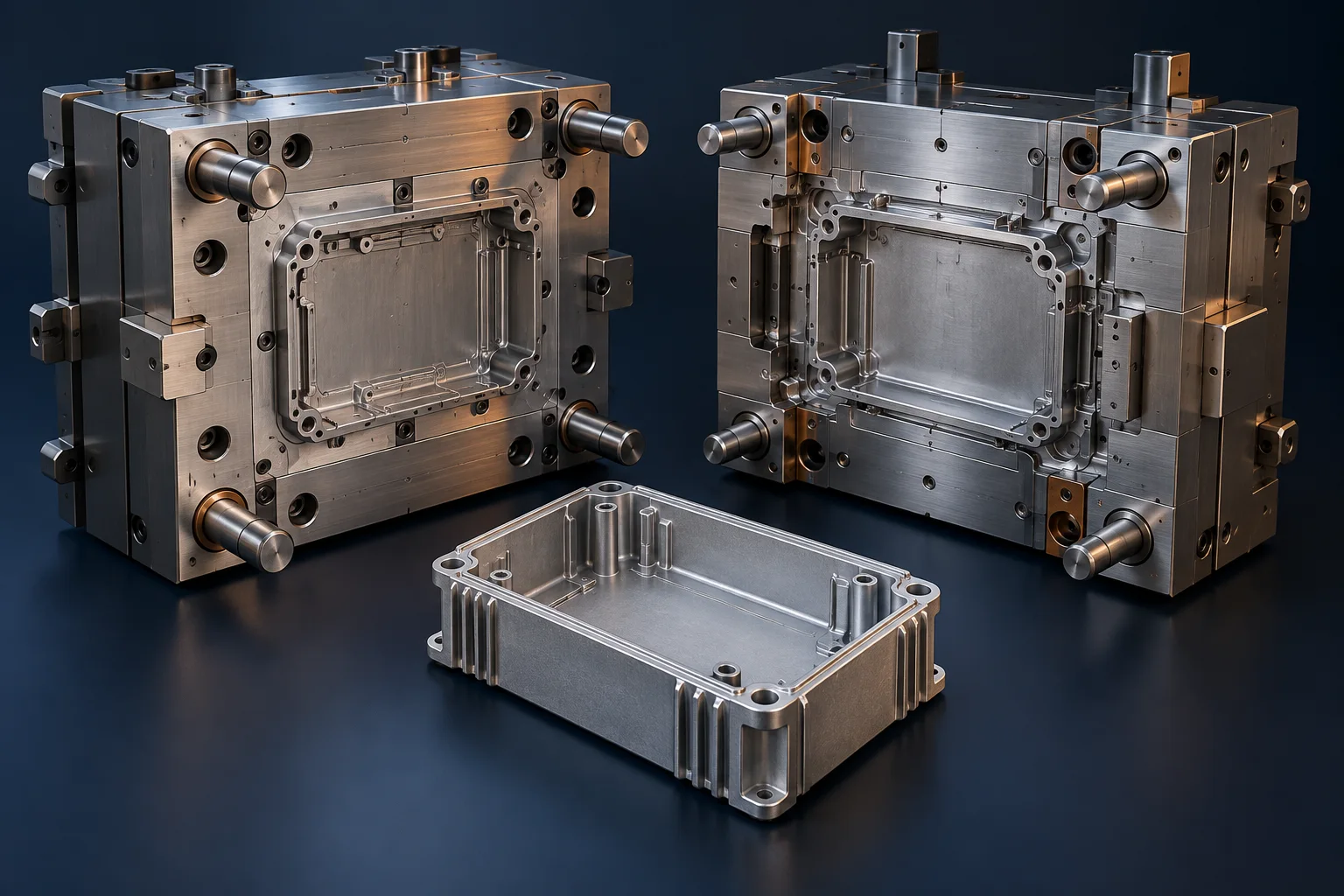
Illustration accompanying the adc12 aluminum for die cast parts guide
Technical illustration.

ALLOY SELECTION

A familiar alloy name is a starting point. Confirm the governing standard and chemistry, then decide which final-part properties actually need evidence.

01 / Materials

Where the alloy enters the process decision

ADC12 is commonly considered for die cast housings and similar complex shapes. Its silicon-containing composition supports casting applications, but successful filling still depends on geometry, gating, venting and the thermal process. The alloy name cannot resolve an isolated heavy section or an impractical flow path.

Separate the cast geometry from features that require machining. Mark bearing bores, gasket faces and threaded ports so allowance and internal-quality requirements can be evaluated at those locations.

02 / Materials

Plan finishing before approving the appearance

A silicon-rich casting substrate can produce an uneven decorative anodized appearance. If appearance is important, review a representative finished casting with the intended pretreatment and finish; a color swatch on another substrate is not the same evidence.

For a coated housing, define masking on electrical contacts, fits and gasket seats. Surface preparation and local casting condition can affect the final visual result. Inspect cosmetic zones separately from functional surfaces.

03 / Materials

Specify the grade without an assumed substitution

ADC12, A380 and other regional alloy names should not be substituted solely because they appear together in a comparison table. Review the specified composition limits, product standard and customer approval requirements.

Ask for material identification tied to the supplied batch and any agreed chemistry report. If strength, ductility or pressure performance is important, define the part condition and appropriate validation separately from chemistry.

MATERIALS / PROJECT DETAILS

Material requirements and records

SubjectTechnical definitionUseful evidence
DesignationApplicable JIS specification and ADC12 gradeMaterial/batch identification
Machined zonesExposed porosity and remaining wallSpecified dimensional and internal-quality checks
FinishCoating system and cosmetic zonesRepresentative appearance sample
Functional propertiesService need and final conditionAgreed property or leakage evidence

The quotation and agreed inspection plan establish which records and checks apply to the project.

COMMON QUESTIONS

Before the specification is complete.

Can ADC12 replace A380?

Only after comparing the applicable specifications and obtaining any required design approval. Similar applications do not establish interchangeability.

Can ADC12 be used for a sealed housing?

It can be evaluated for that application. The geometry, process and machined condition still need an appropriate leak-test requirement; the alloy designation is not a leak-tightness guarantee.

RELATED GUIDES

Start with what you have.

Send the part’s purpose, available files and the question you need to resolve. Material, process and inspection details can be developed during the review.

Send an inquiry ↗
VELNOCAST / CONTACT

Send Your Inquiry

Tell us what you need. Drawings or photos are welcome, but not required.

Up to 3 files, 5 MB each. STP, STEP, IGES, IGS, STL, DXF, DWG, PDF, JPG, JPEG, PNG or ZIP.
Add project details (optional)