CUSTOM ALUMINUM COMPONENTS · CASTING · MACHINING · FINISHINGHave a drawing? Request a quote

Materials / TECHNICAL GUIDE

A380 aluminum for die casting

A380 is a widely used aluminum die casting alloy for complex components. Its suitability should be assessed against the drawing, service environment and final finishing condition.

Discuss your part ↗

Drawings, sketches, photographs or an early specification are welcome.

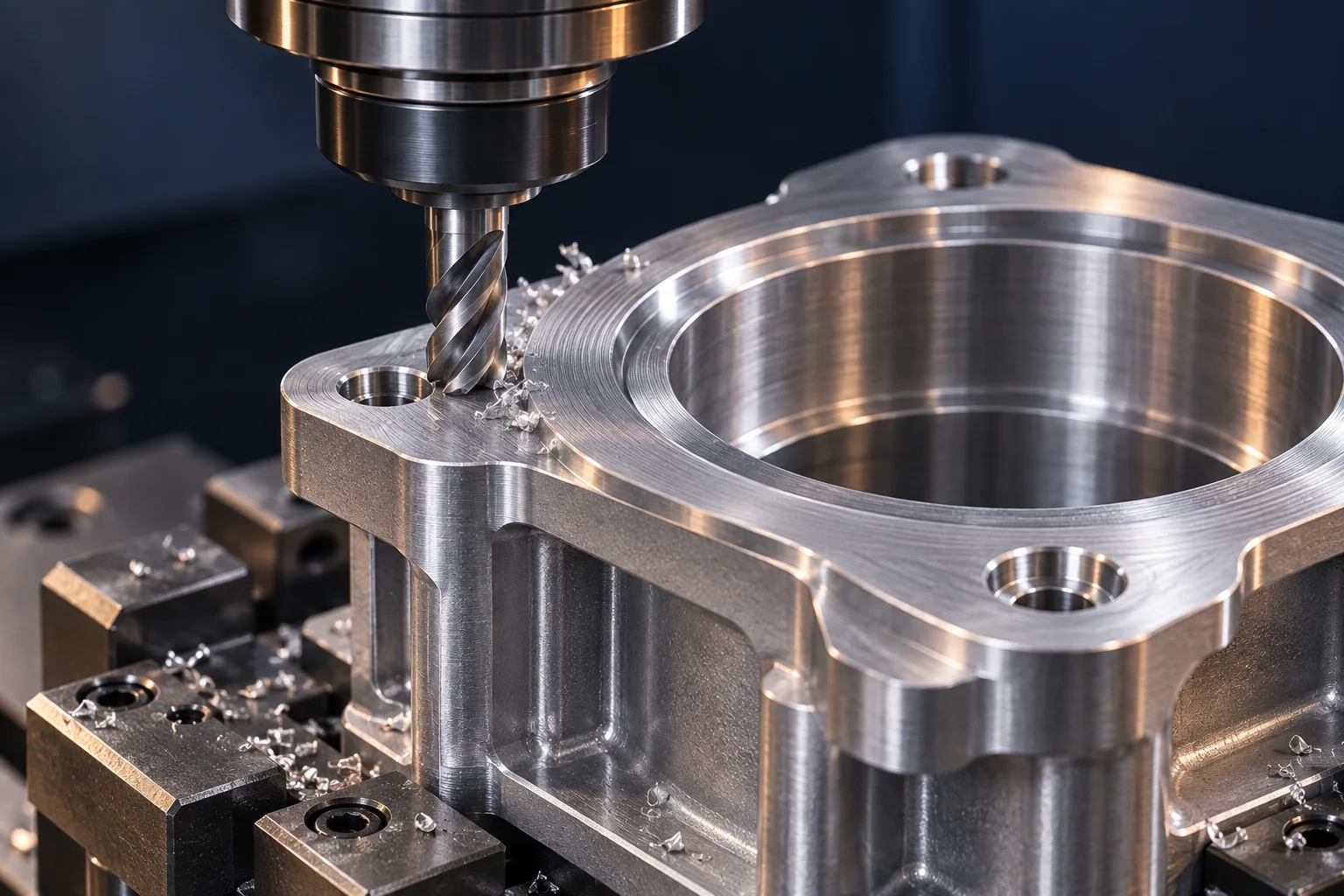
Illustration accompanying the a380 aluminum for die casting guide
Technical illustration.

ALLOY SELECTION

Use A380 as part of a manufacturing specification, then identify the local features whose fit, surface or pressure function needs tighter control than the general casting.

01 / Materials

Let the application define the comparison

A380 is often considered for housings and brackets where cast detail and repeat production make die casting attractive. Compare tooling and secondary operations with machining from stock before choosing the route for a new or changing design.

Use values from the applicable specification and agreed specimen condition when mechanical properties enter the design. Published typical properties help screen materials; they are not acceptance results for a finished part.

02 / Materials

Control the interfaces after casting

The base alloy does not establish bearing-fit accuracy or the relationship between a flange and a bore. Plan datum surfaces and machining setups around those interfaces. Identify whether final dimensional acceptance is before or after coating.

Removing the cast surface can expose internal discontinuities. On a sealing face or port, discuss local inspection and leakage requirements rather than extending a cosmetic porosity rule to every internal region.

03 / Materials

Review coating and substitution explicitly

Match surface preparation, coating and masking to the environment and assembly. Where decorative anodizing is requested, confirm that the appearance on a representative casting is acceptable before relying on a color reference.

State the governing material specification and casting designation, including condition where required. A380 is not an automatic substitute for ADC12, and A356 introduces a different alloy/process discussion. Record any approved alternative on the order.

MATERIALS / PROJECT DETAILS

Material requirements and records

SubjectTechnical definitionUseful evidence
Material acceptanceGrade, governing specification and batchAgreed material documentation or chemistry
Bearing and mounting featuresDrawing datums and final conditionActual size and geometric results
Sealing requirementMachined wall and finished componentDefined leak-test record
SubstitutionComposition and performance reviewWritten approval of the alternate specification

The quotation and agreed inspection plan establish which records and checks apply to the project.

COMMON QUESTIONS

Before the specification is complete.

Does an A380 material report prove component strength?

A chemistry report identifies composition. Required strength needs evidence appropriate to the specification, specimen and component condition.

Is a fine cosmetic finish possible?

Review the desired appearance, surface preparation and coating on a representative sample. Specify visible zones and acceptance conditions rather than relying on the alloy name.

RELATED GUIDES

Start with what you have.

Send the part’s purpose, available files and the question you need to resolve. Material, process and inspection details can be developed during the review.

Send an inquiry ↗
VELNOCAST / CONTACT

Send Your Inquiry

Tell us what you need. Drawings or photos are welcome, but not required.

Up to 3 files, 5 MB each. STP, STEP, IGES, IGS, STL, DXF, DWG, PDF, JPG, JPEG, PNG or ZIP.
Add project details (optional)