CUSTOM ALUMINUM COMPONENTS · CASTING · MACHINING · FINISHINGHave a drawing? Request a quote

Capabilities / TECHNICAL GUIDE

Rapid prototyping for aluminum components

Use an early sample to answer a specific design question: assembly access, envelope, machining feasibility or functional performance. The best prototype route depends on the evidence needed next.

Discuss your part ↗

Drawings, sketches, photographs or an early specification are welcome.

Illustration accompanying the rapid prototyping for aluminum components guide
Technical illustration.

PROCESS PLANNING

A machined prototype can establish a mounting pattern or gasket layout before tooling. It does not establish the porosity, cast microstructure or surface appearance of the eventual production casting.

01 / Capabilities

Separate fit checks from material validation

For an envelope or access review, a non-production material or simplified sample may be sufficient. Identify that limitation on the sample record so it is not later treated as approval of strength, thermal behavior or sealing performance.

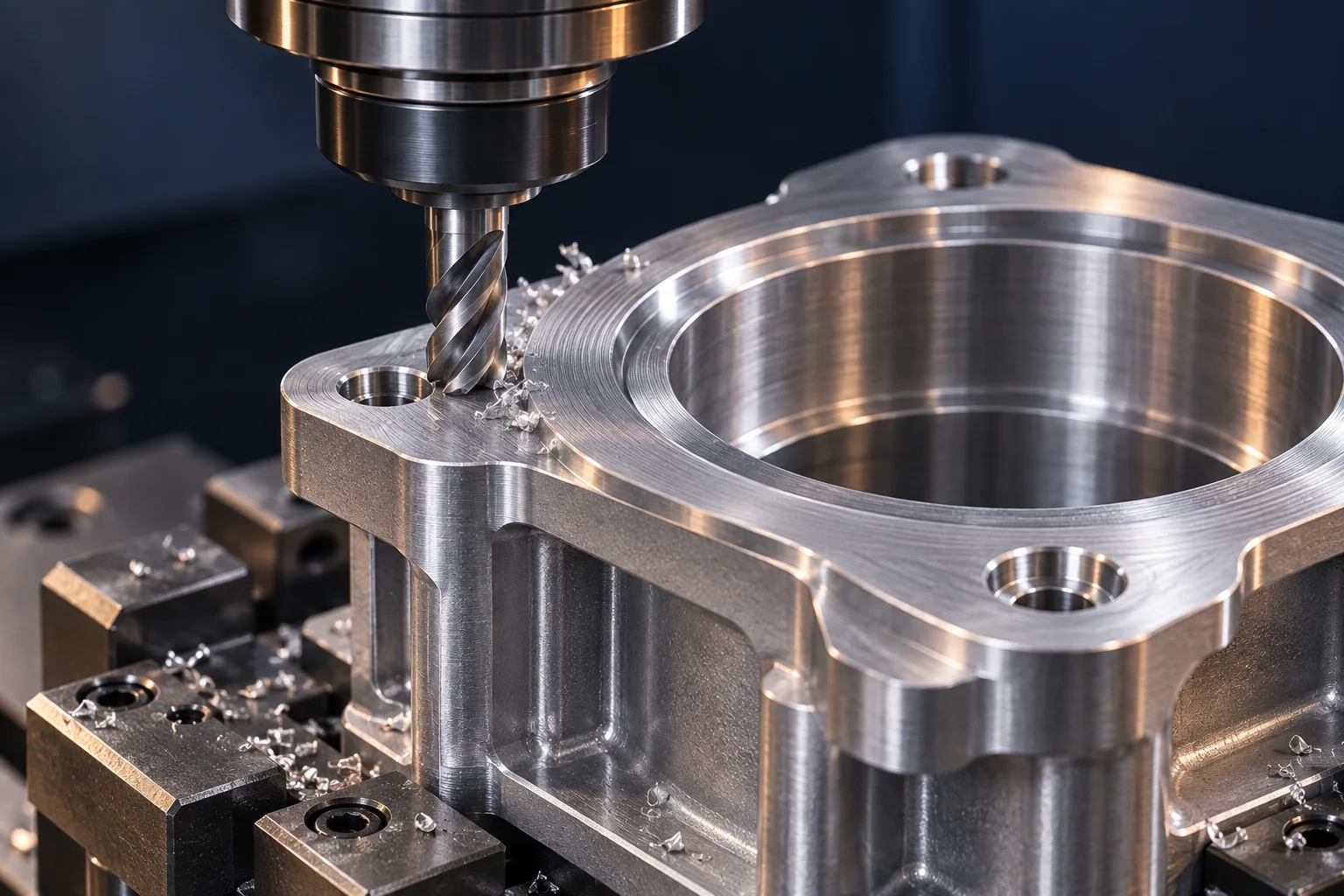
A machined aluminum sample is useful when actual threads, bearing seats and sealing interfaces matter. Confirm the stock alloy and condition: a wrought alloy sample and a cast production alloy can behave differently under load, heat and finishing.

02 / Capabilities

Choose a route with the next revision in mind

CNC machining avoids committing a production die while the geometry is still moving. Deep pockets, inaccessible undercuts and thin walls can make the machining route expensive or require a temporary design concession. Record every concession.

An alternative casting or additive route can help explore geometry, but its process effects remain specific to that route. When the question concerns production casting fill, local porosity or ejection, a production-representative tool trial is the relevant next step.

03 / Capabilities

Carry the learning into the production drawing

Review the sample in the assembly and mark the actual interference, clearance or service-access issue. Update the controlled drawing and model together; an email annotation should not become the only record of the accepted design.

Define what remains open after the prototype: cast dimensions, final alloy properties, finish appearance, leak-test behavior or process repeatability. A sample that proves fit can still be a successful prototype even when those later checks remain scheduled.

CAPABILITIES / PROJECT DETAILS

Tooling and sampling details

SubjectTechnical definitionUseful evidence
Envelope and installationPhysical mock-up or machined sampleInterference notes, fastener access and revised geometry
Working interfacesMachined aluminum in stated conditionFit, thread and sealing-interface results
Casting feasibilityProduction-representative trialFill, trim, ejection and machining observations
Design releaseRevision-controlled drawing/modelAccepted changes and remaining validation scope

The quotation and agreed inspection plan establish which records and checks apply to the project.

COMMON QUESTIONS

Before the specification is complete.

Can I ask for a prototype without a complete drawing?

Yes. Send photographs, a sketch, the mating part or the dimensions you know. Explain what the sample needs to demonstrate so the missing information can be developed in the right order.

Is a prototype delivery date fixed?

Timing depends on geometry, material availability, quantities and the work needed to define the part. A quotation should identify the prototype route and its assumptions before setting a schedule.

RELATED GUIDES

Start with what you have.

Send the part’s purpose, available files and the question you need to resolve. Material, process and inspection details can be developed during the review.

Send an inquiry ↗
VELNOCAST / CONTACT

Send Your Inquiry

Tell us what you need. Drawings or photos are welcome, but not required.

Up to 3 files, 5 MB each. STP, STEP, IGES, IGS, STL, DXF, DWG, PDF, JPG, JPEG, PNG or ZIP.
Add project details (optional)